
*This post may contain affiliate links for which I earn commissions.*
Small Patio Garden Ideas with Potted Plants
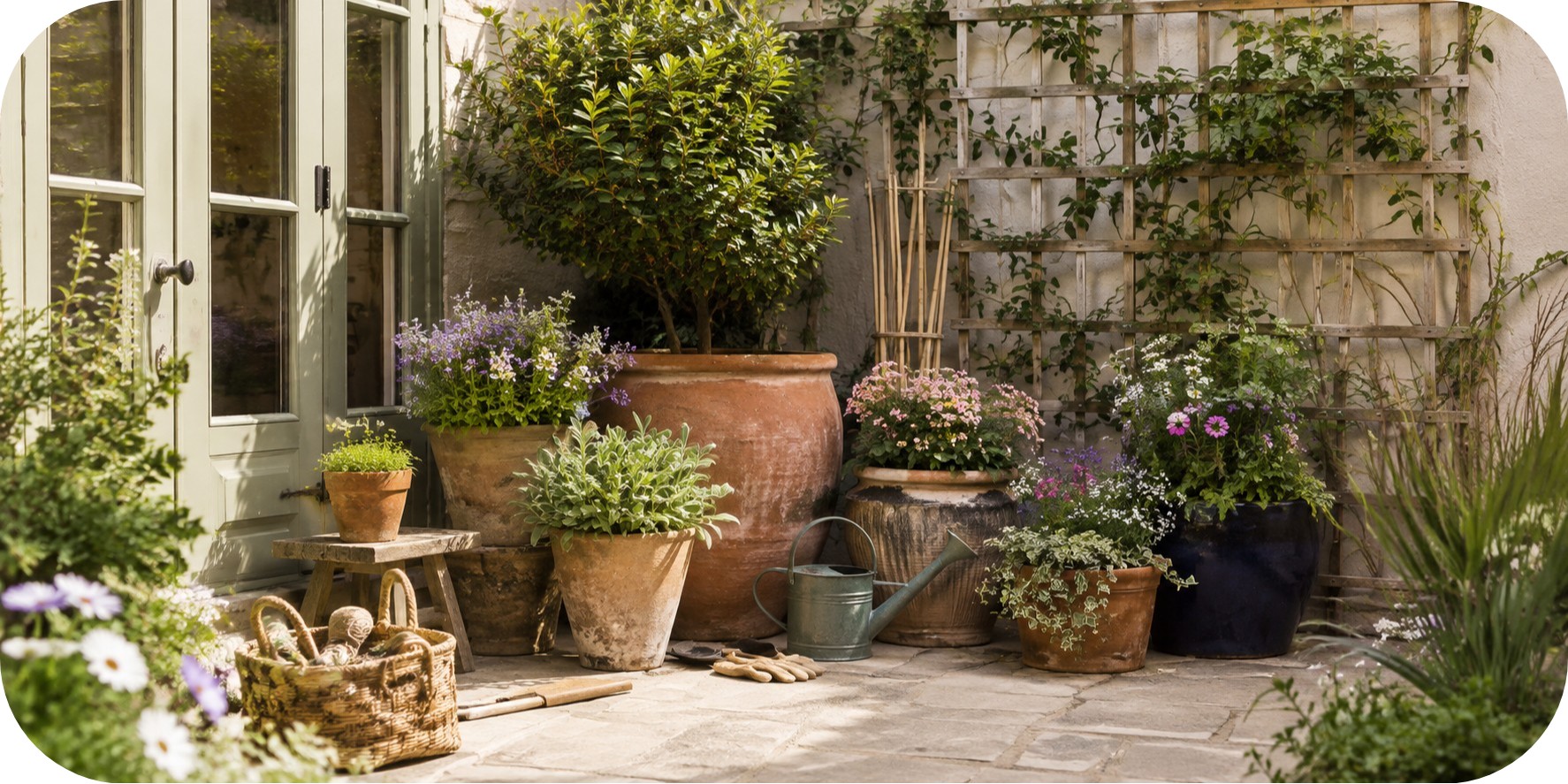
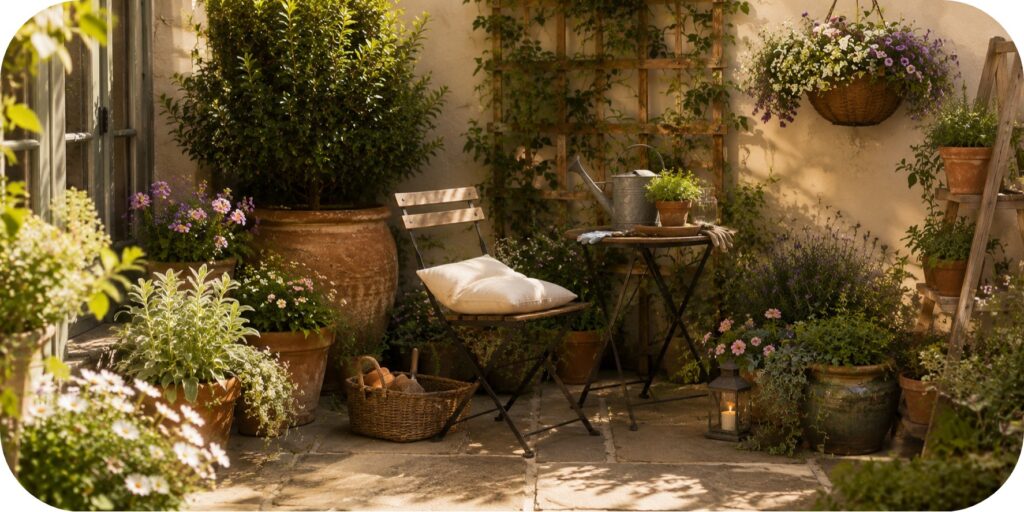
A small patio can start feeling like a real garden surprisingly quickly once plants begin to gather around its edges. A tall leafy planter in one corner, flowers spilling from weathered terracotta beside a chair, and a little climbing greenery against the wall can create that lush feeling without sacrificing the space you need to move around.
The secret is to build layers rather than simply adding more pots.
The Overall Look
For this kind of patio, I like a relaxed mix of leafy greens, seasonal flowers, weathered terracotta, aged clay, and a few quieter neutral planters. The containers don’t need to match, but repeating materials or colors helps the collection feel intentional.
Use larger pots to establish the structure, medium containers for flowers and foliage, and smaller pots to fill occasional gaps. Taller plants and climbing greenery work well near walls and boundaries, while lower flowers can soften the edges around seating.
Natural wood, simple metal furniture, stone or brick paving, and slightly weathered surfaces suit the look beautifully. Nothing needs to feel pristine. A faded terracotta pot or slightly uneven arrangement often makes a small patio feel more like a real garden.
Most importantly, leave some paving visible. The contrast between lush planting and open floor space helps the greenery stand out while keeping the patio comfortable to use.
Visual Ideas to Steal
Build a Layered Corner with Three Pot Heights
Choose one patio corner and begin with a large planter containing a tall shrub or structural plant. Add a medium pot of flowers beside it and finish with a smaller container holding something low or trailing.
The stepped heights create depth without requiring a huge collection of pots.
Line the Patio Edge Instead of the Center
Keep your main walking and seating areas open by moving most containers toward the patio boundaries.
Alternate larger leafy plants with smaller flowering pots rather than creating an unbroken row. Those little variations in height and spacing make the arrangement feel much more natural.
Why this works: Concentrating planting around the perimeter gives you the lushness of a garden without sacrificing the limited floor area that makes the patio functional.
Use One Large Planter as an Anchor
Small patios don’t always need small pots.
A substantial planter containing a compact shrub, ornamental grass, or other appropriately sized plant can provide a strong focal point. Surround it with just two or three smaller containers rather than lots of little pots competing for attention.
Create a Terracotta Pot Collection
Group several weathered terracotta pots together and vary their height, width, and shape.
Fill them with a mixture of flowers, herbs, foliage, and trailing plants, repeating a few plants or flower colors across the group. The terracotta ties everything together even when the planting is varied.
I especially like leaving one or two pots slightly apart from the main cluster. It keeps the arrangement from looking too carefully staged.
Add a Raised Planter Along a Wall
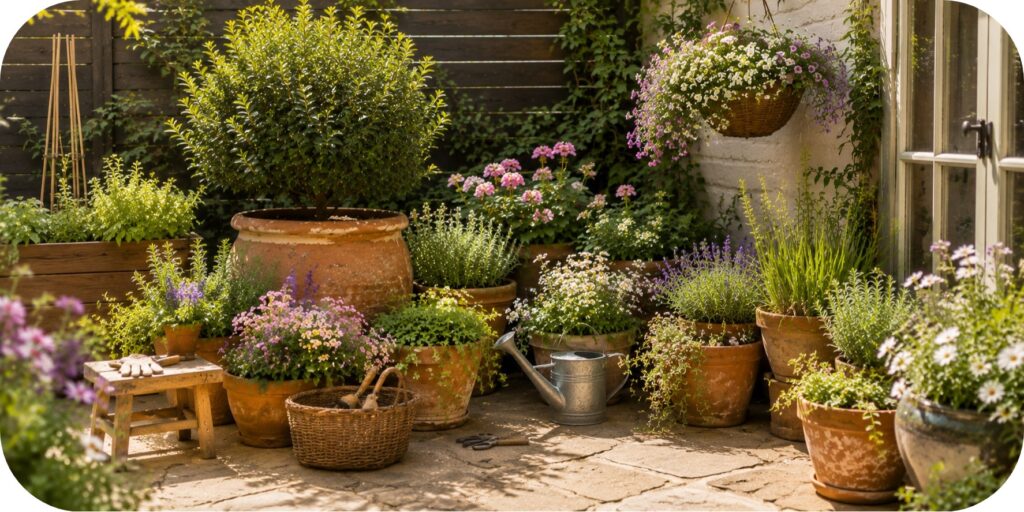
A long, relatively narrow raised planter can turn an empty patio boundary into useful growing space.
Plant it with herbs, compact flowers, leafy plants, or a simple mixture of all three. Look for a depth that provides useful growing room without projecting so far into the patio that it narrows your walkway.
Grow Up with a Trellis
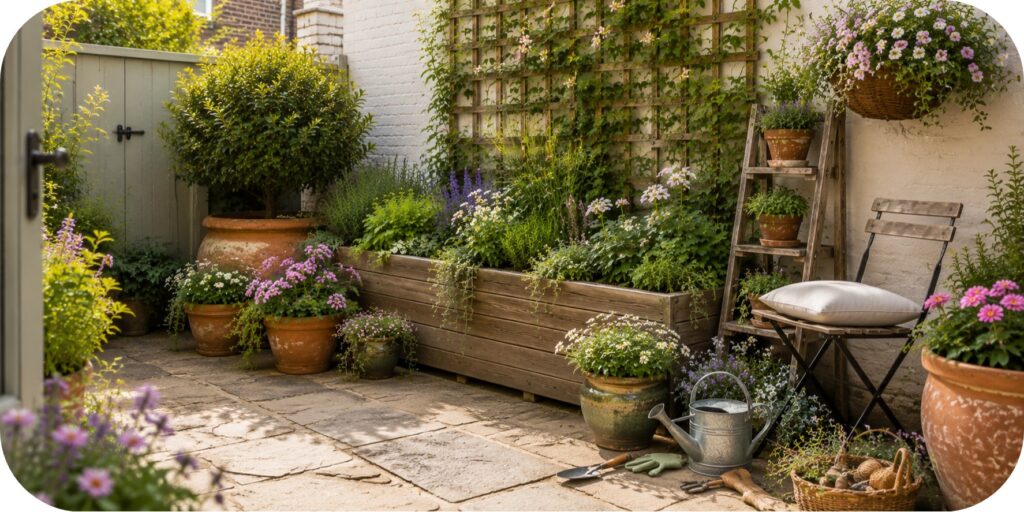
Place a narrow trellis behind one of your larger containers and let a climbing plant provide height.
This is particularly effective against a plain fence or wall because it adds greenery above the container layer without requiring more floor space. Keep the structure proportional to the patio so it doesn’t visually overwhelm the area.
Surround a Small Seating Area with Plants
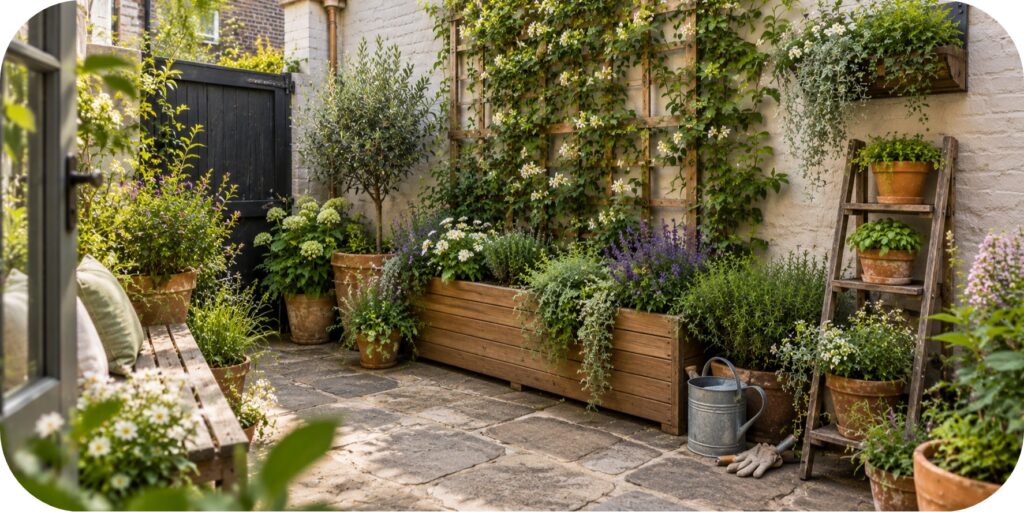
Rather than placing furniture in one zone and plants in another, let the two overlap visually.
A compact chair or bench can sit beside a tall planter, with smaller flowers near its feet and greenery behind it. You get a much cozier result when the seating feels tucked into the garden rather than simply placed in front of it.
Lift Some Plants Off the Ground
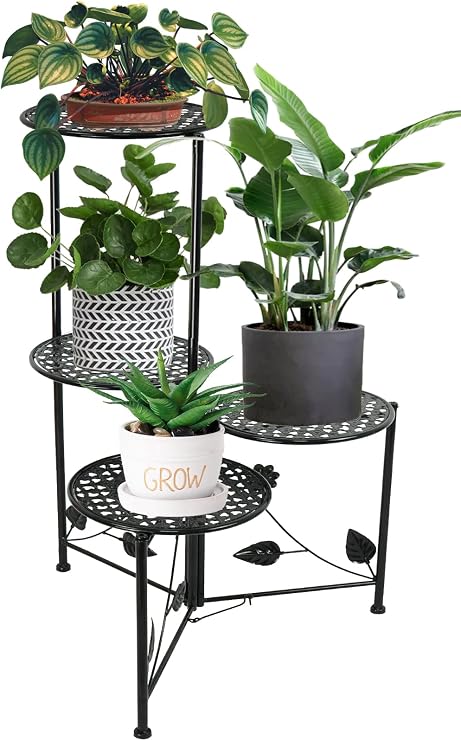
A narrow outdoor plant stand can add another planting level without requiring several additional large containers.
Use it for smaller pots of herbs, compact flowers, or trailing greenery. Keep the stand fairly open so it doesn’t turn into a dense wall of containers.
Hang One Basket Above the Containers
If your patio has an appropriate overhead support, a hanging basket can connect the ground-level planting with the space above.
Choose one generously planted basket rather than filling the overhead area with them. Let trailing flowers or greenery fall naturally while keeping the basket clear of walkways and seating.
Mix Flowers and Foliage
Flowers provide color, but foliage is what can make a container garden feel full and layered for longer stretches of the season.
Combine flowering plants with ferns, ornamental grasses, compact shrubs, herbs, or other foliage plants suited to your conditions. Different leaf shapes and shades of green add interest even when fewer plants are blooming.
Keep One Section Deliberately Simple
You don’t have to plant every patio boundary.
Leave a small stretch of wall, fence, or paving relatively open beside a more abundant container arrangement. That breathing room helps the planted sections look fuller and prevents a tiny patio from becoming visually busy.
A Few Helpful Picks
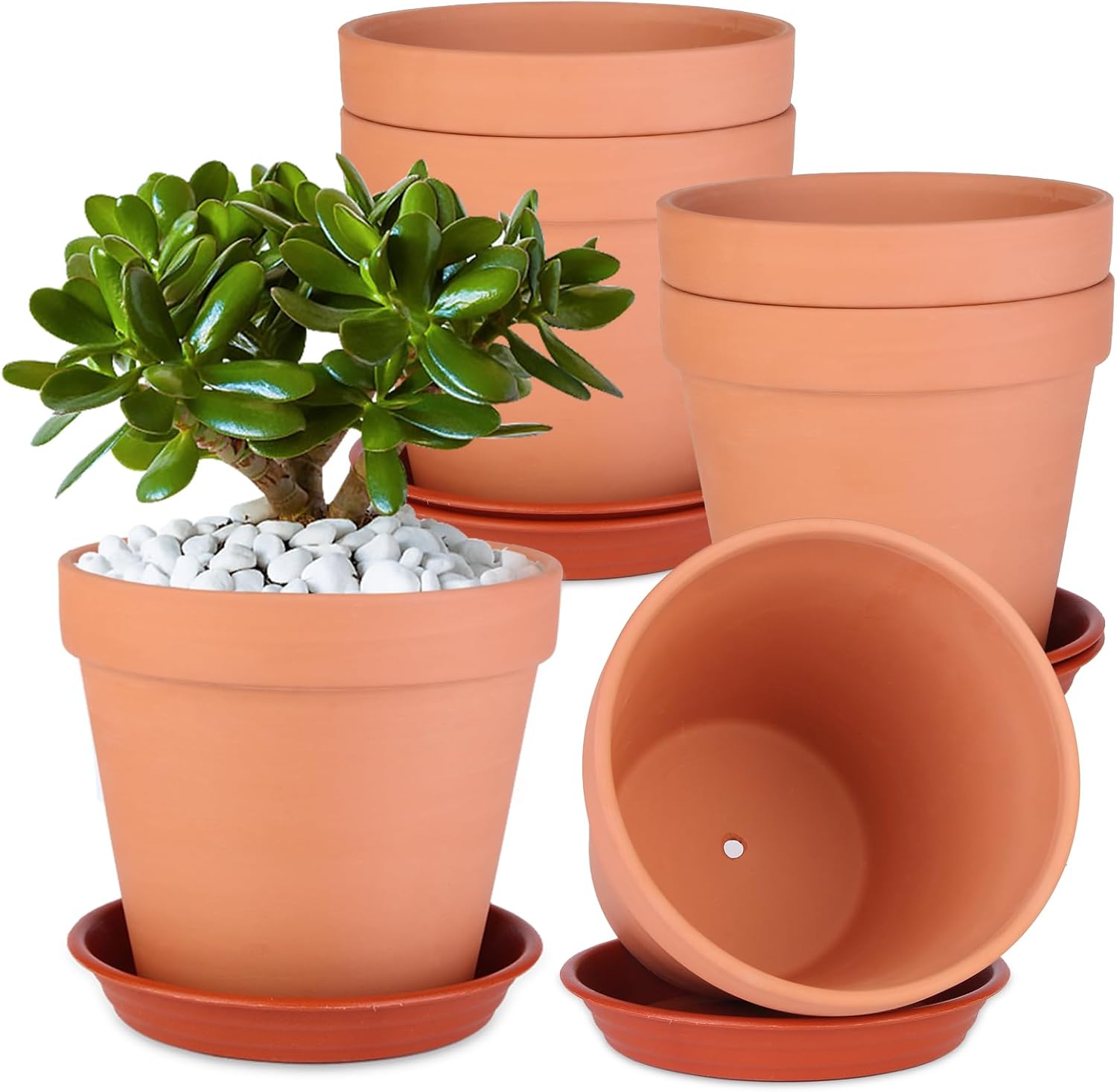
Terracotta planters are particularly useful for creating relaxed groups of containers. Look for several complementary sizes rather than a perfectly matching collection, and let the natural variations in the clay become part of the look.
A large outdoor planter can provide the visual anchor for the entire arrangement. Choose enough soil volume for the plant you intend to grow while keeping the overall proportions appropriate for your patio.
An outdoor plant stand is another useful way to introduce height. A slim, weather-resistant design can raise smaller pots and create another planting layer without taking over the patio.
Product Suggestions
Click Image To View

Click Image To View
Click Image To View
The Little Details
A container garden often looks more natural when the pots aren’t arranged in perfectly even rows. Move one slightly forward, tuck another behind a larger planter, and let plants overlap visually.
Repeat a flower color in two or three places around the patio. A little lavender, soft pink, white, or warm coral appearing in separate containers can quietly connect the whole garden.
Let some foliage spill over pot edges. Trailing greenery softens the hard line where a container meets paving and makes established arrangements feel more abundant.
Give larger plants enough visual space around them. A beautiful statement planter loses some of its impact when six smaller pots are pressed tightly against it.
Keep practical objects attractive but genuinely useful. A compact watering can tucked near the containers feels completely at home because it actually belongs there.
And don’t worry about making every pot identical. A restrained mix of terracotta, aged clay, and one or two muted ceramic finishes usually has more character than a perfectly coordinated set.
Helpful Finds for This Style
Terracotta planters bring warmth and natural texture to a patio while working with almost any planting style. Look for frost-resistant options where appropriate, useful drainage holes, and several complementary sizes so you can build layered groups rather than rows of identical pots.
Large planters provide visual anchors and give bigger plants more room to grow. Choose weather-resistant containers with good drainage and proportions that accommodate the mature size of the plant without overwhelming your patio.
Raised planters create a defined growing area while bringing flowers, foliage, or herbs higher into view. On a small patio, look for relatively narrow designs that provide useful soil depth without projecting too far into the usable space.
A plant stand lets you create height with smaller containers. Slim metal or weather-resistant wooden designs with two or three levels work particularly well when you want layered planting but need to preserve floor space.
Hanging baskets bring flowers and trailing greenery into the upper part of the patio. Look for sufficient planting volume, secure outdoor-rated hanging hardware, and a position where watering and maintenance will still be convenient.
A narrow trellis provides support for climbing plants and helps turn a bare boundary into part of the garden. Choose a height and width appropriate to the wall, fence, container, and mature plant rather than simply selecting the largest structure that fits.
A small chair, narrow bench, or compact two-seat arrangement gives all that planting somewhere to gather around. Open-frame furniture tends to feel lighter in a limited space and leaves more of the garden visible.
A compact watering can is easier to maneuver among tightly grouped patio containers than a large garden model. Look for a comfortable handle and a narrow spout that lets you reach the soil beneath dense foliage without soaking flowers and leaves unnecessarily.
Product Suggestions

Click Image To View

Click Image To View

Click Image To View
You don’t need dozens of containers to make a small patio feel like a little garden. Start with one large anchor planter, two or three supporting pots, and one area where plants can gain some height, then build the arrangement gradually as you see where there’s genuinely room to grow.