
*This post may contain affiliate links for which I earn commissions.*
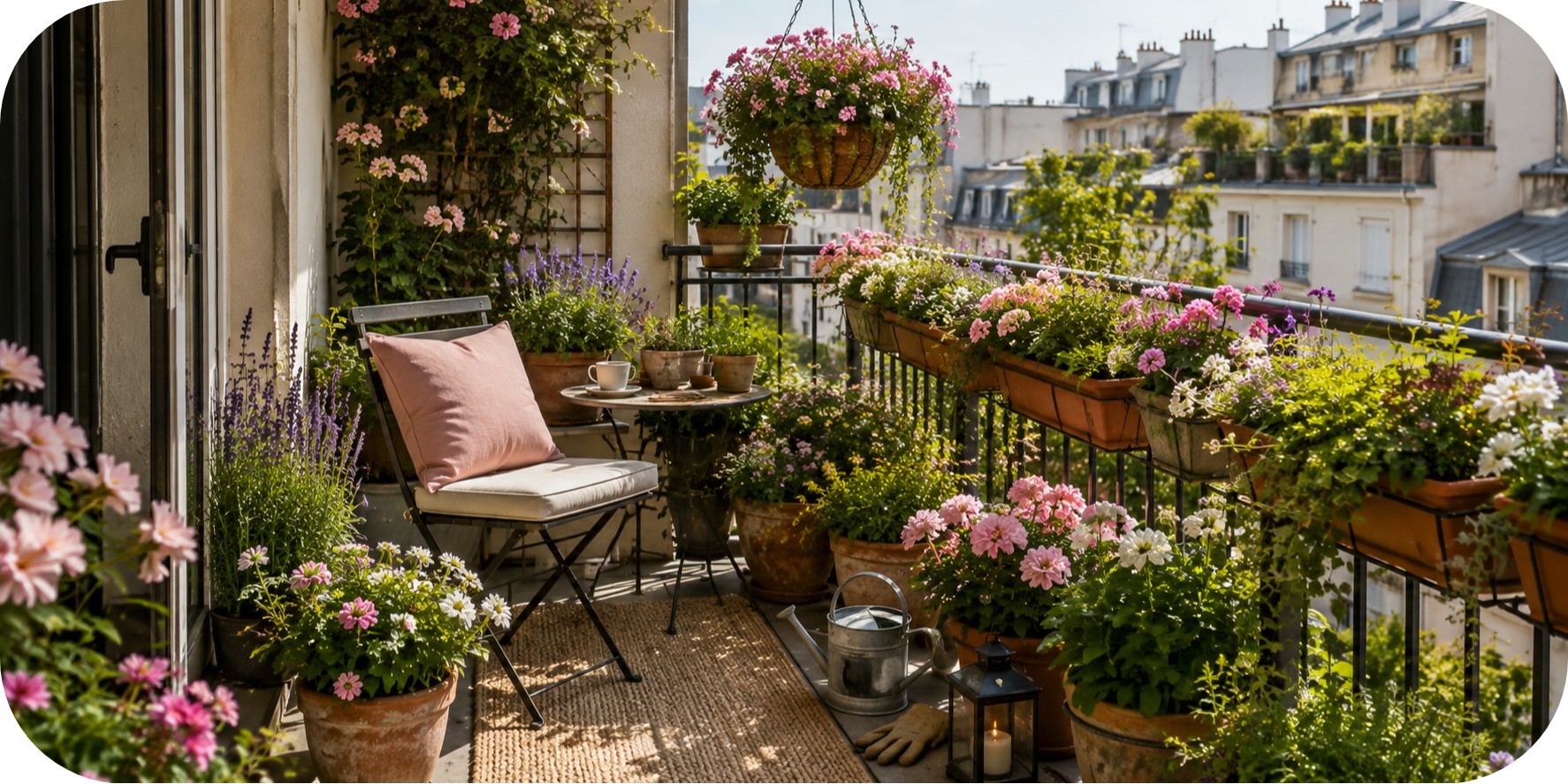
A small balcony can feel completely different once greenery begins to soften the railings and there’s a comfortable place to sit among the plants. Picture one cozy chair tucked beside overflowing flowers, herbs within reach, and trailing greenery catching the afternoon light.
You don’t need much floor space to create that feeling. The key is deciding what deserves the floor and what can grow above it.
The Vibe
The look we’re going for is lush and inviting without making the balcony feel crowded. Start with plenty of natural green, then bring in color through flowering containers in soft pinks, lavender, white, coral, or whatever palette suits your home.
Terracotta, weathered clay, woven textures, and simple wood or metal furniture keep everything relaxed rather than overly styled. Plants should appear at several heights, with taller foliage near the boundaries, flowers around seating level, and trailing plants spilling gently from baskets or railing planters.
A compact chair provides the visual anchor and gives all that planting a purpose: this isn’t simply somewhere to grow plants, but somewhere you can actually spend time.
Warm natural daylight works beautifully during the day, while a strand of soft outdoor lights can make the same little garden especially inviting after sunset.
Looks to Try
1. Surround One Comfortable Chair with Flowers
Start with the simplest arrangement: one genuinely comfortable outdoor chair surrounded by flowering containers.
Place larger pots beside or slightly behind the chair, then bring smaller flowers toward the front. This creates a little pocket of greenery without needing an entire outdoor furniture set.
A chair with an open frame is particularly useful on a tiny balcony because you can still see the floor beneath it.
2. Fill the Railing with Flowers
Railing planters let you introduce a substantial amount of color without sacrificing precious floor space.
Try planting them with a mixture of upright and trailing flowers so the arrangement doesn’t look like one rigid horizontal strip. Petunias, calibrachoa, lobelia, geraniums, and trailing greenery can all create that softer effect when they’re suitable for your balcony’s conditions.
Keep the inside of the railing relatively uncluttered so you still have room to move around.
Why this works: Moving some of your planting onto the railing gives you a fuller garden while preserving the limited floor area for seating and circulation.
3. Create a Green Corner Behind the Chair
If one end of your balcony feels bare, use that corner for taller greenery.
A narrow vertical planter, compact trellis, or group of taller containers can create a leafy backdrop behind your seating. Position shorter flowering pots around the chair so the planting gradually steps down toward the floor.
This arrangement can also make an exposed balcony feel a little more sheltered without requiring a bulky privacy screen.
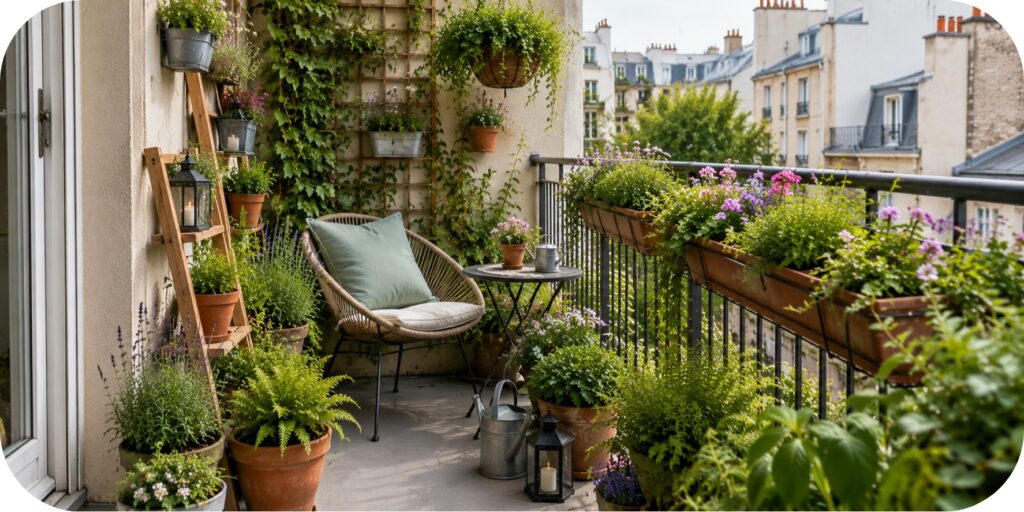
4. Pair a Cozy Chair with a Tiny Side Table
You don’t necessarily need a full bistro set.
One comfortable chair and a small side table may be much more useful if your balcony is particularly narrow. Look for a table just large enough for a drink, book, or small pot of herbs.
I especially like this arrangement when the table can easily be moved. On a small balcony, a few extra inches of walkway can make a surprising difference.
5. Layer Terracotta Pots Around the Perimeter
Instead of scattering containers across the balcony floor, concentrate them around the edges.
Use one or two larger terracotta pots as anchors, medium containers for flowers and herbs, and smaller pots for low-growing or trailing plants. The varied heights create the impression of a much fuller garden without plants occupying every available inch.
An outdoor plant stand can help you create those levels without adding another large floor planter.
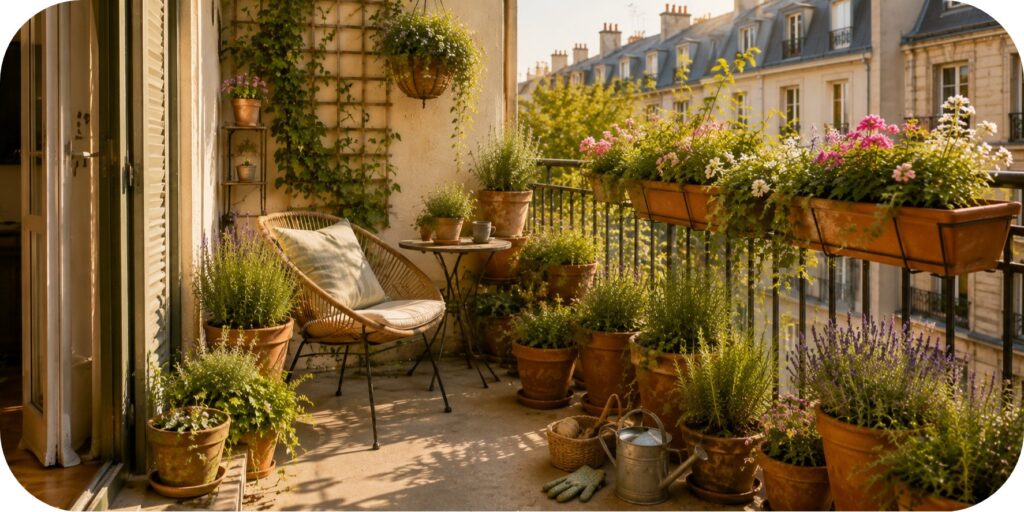
6. Hang Flowers Above Your Seating Area
A hanging basket introduces flowers at eye level and leaves the floor completely untouched.
One generously planted basket usually has more impact than several small ones. Position it where the flowers can trail naturally without brushing against you every time you sit down or blocking a doorway.
Make sure the hanging support is suitable for the weight of a fully watered container, which can be considerably heavier than an empty basket.
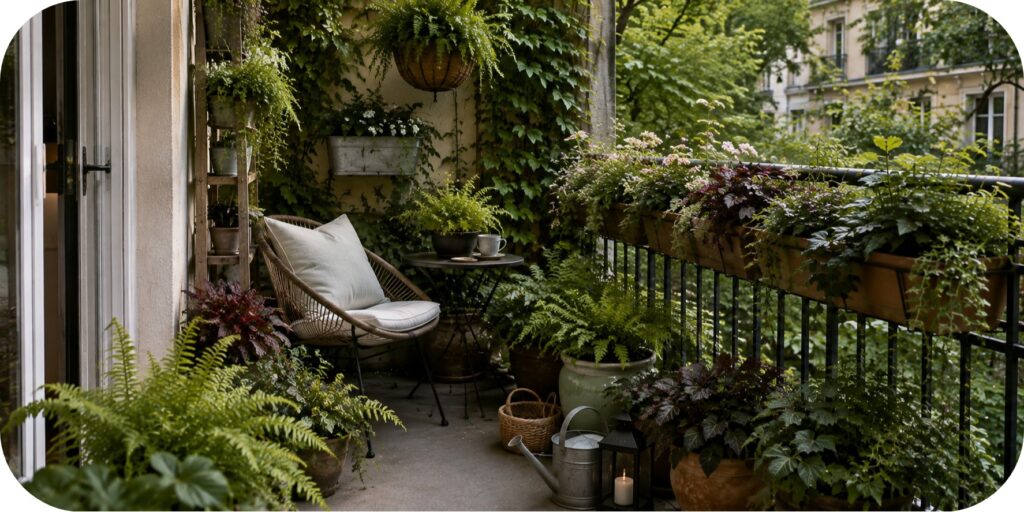
7. Make a Shady Balcony Feel Lush
A balcony doesn’t need strong sun to become a beautiful little garden.
For a shadier position, concentrate on foliage texture. Ferns, compact hostas, heuchera, begonias, and other plants suited to your actual light conditions can create layers of fresh green, burgundy, silver, and softer flower color.
Pair them with a simple wood or woven-look chair and muted containers for a calmer garden retreat.
8. Mix Flowers with Fresh Herbs
Your balcony can be pretty and productive at the same time.
Place rosemary, thyme, parsley, mint, basil, or other suitable culinary herbs among flowering containers rather than creating a separate herb section. A small pot of herbs on the side table can be especially charming while keeping something useful within easy reach.
Just group plants according to compatible light and watering needs rather than choosing combinations purely for appearance.
9. Create an Evening Balcony Garden
String lights can completely change the atmosphere once daylight fades.
Run one simple strand along a railing, overhead support, or wall where appropriate rather than surrounding the entire balcony with lights. Warm illumination against leaves, terracotta, and flowers creates enough atmosphere without overpowering the garden.
Add one comfortable chair and a small table, and suddenly a balcony that was mostly used during the day becomes somewhere you’ll want to sit in the evening too.
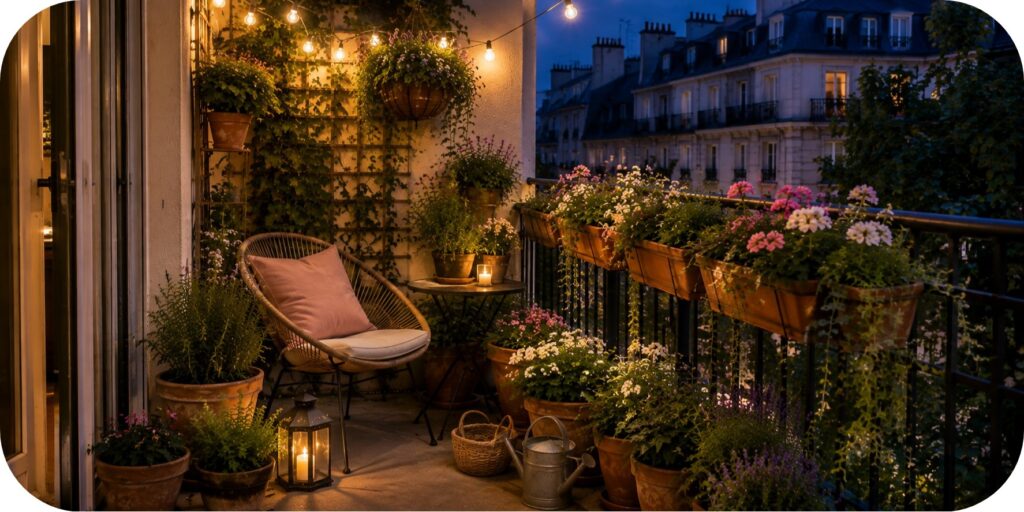
10. Keep the Center Surprisingly Open
One of the easiest ways to make a tiny balcony feel smaller is filling the middle with furniture and pots.
Push most planting toward the perimeter, railing, walls, and corners. Then leave a simple route between the door and your chair.
That little patch of open floor gives your eye breathing room and makes the abundant planting around it feel intentional rather than crowded.
Quick Finds to Match This Look
A few well-chosen pieces can establish the whole balcony before you add the smaller details.
Compact outdoor chair: Look for a narrow chair with an open frame, comfortable seat, and outdoor-suitable materials.
Railing planters: Choose secure planters sized appropriately for your railing, with enough growing depth for the flowers or herbs you want to plant.
Outdoor plant stand: A narrow tiered or multi-level design can introduce more greenery without spreading containers across the entire balcony floor.
Product Suggestions

Click Image To View

Click Image To View

Click Image To View
Make It Feel Intentional
- Choose one main container material, such as terracotta, then mix in a few complementary pots rather than using a completely matching set.
- Repeat two or three flower colors throughout the balcony to visually connect separate containers.
- Let a few plants trail naturally over railing planters, baskets, and taller pots.
- Keep the area immediately around the door relatively open.
- Place your largest plants toward corners and boundaries, not in the center.
- Add one soft element, such as a simple outdoor cushion, rather than filling the chair with decorative accessories.
- Save the smallest containers for herbs, compact flowers, and those little gaps where a large pot would feel awkward.
Products That Help You Get This Look
Compact Outdoor Chairs
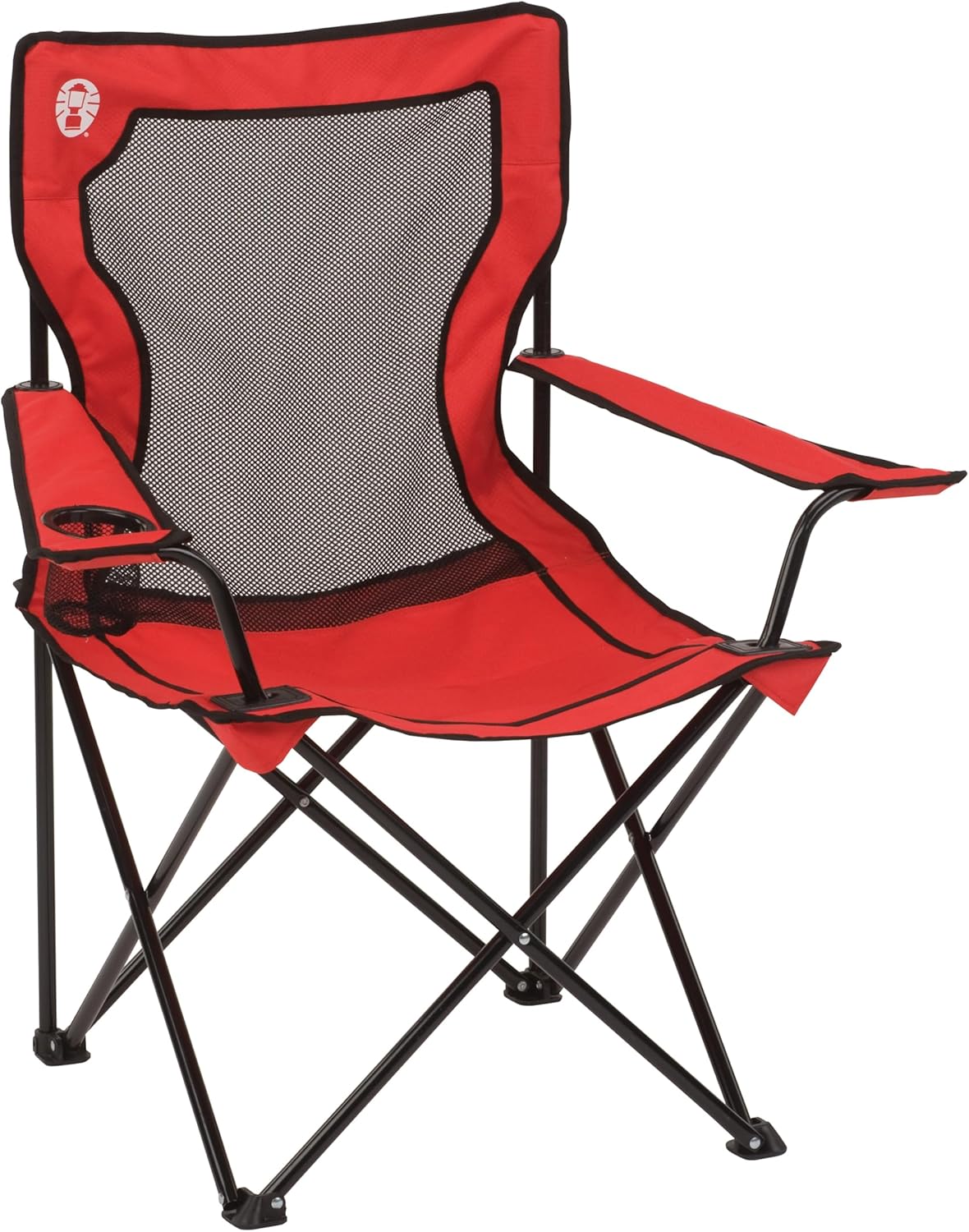
A compact chair gives the garden somewhere to gather around while making the balcony genuinely useful. Look for a relatively narrow footprint, comfortable proportions, weather-resistant materials, and an open frame that doesn’t create too much visual weight.
Balcony Planters
These are useful for adding substantial planting without relying entirely on tiny individual pots. Choose shapes that fit neatly along boundaries and have suitable drainage and enough soil volume for the plants you’re growing.
Railing Planters
Railing planters turn otherwise unused vertical space into a growing area. Look for a secure mounting system compatible with your railing, appropriate planting depth, good drainage, and a size that won’t project too far into your usable balcony space.
Hanging Baskets
One hanging basket can introduce flowers and trailing greenery above the main planting layer. Choose an outdoor-suitable basket with enough growing volume to prevent it from drying excessively quickly, and always use properly rated hanging hardware.
Vertical Planters
Vertical planters are particularly useful when you want more plants but have very little floor area available. Look for a narrow design with accessible planting pockets or tiers and enough stability for an exposed outdoor location.
Outdoor Plant Stands
Plant stands help turn a collection of containers into a layered arrangement. A slim, weather-resistant stand that raises two or three plants to different heights is generally more useful here than a large decorative shelving unit.
Small Outdoor Side Tables
A tiny side table gives you somewhere for a drink or book without committing the balcony to a dining arrangement. Round tables and lightweight designs are particularly easy to position beside a single chair.
Outdoor String Lights
String lights add a warmer layer to the garden once evening arrives. Look for lights specifically rated for outdoor use and choose a simple warm-white style that complements the plants rather than becoming the balcony’s main attraction.
Product Suggestions
Click Image To View

Click Image To View

Click Image To View
You don’t need to furnish and plant the entire balcony at once. Start with one comfortable chair and one really good group of plants, then sit there for a while and notice where you still have room to grow.