
*This post may contain affiliate links for which I earn commissions.*
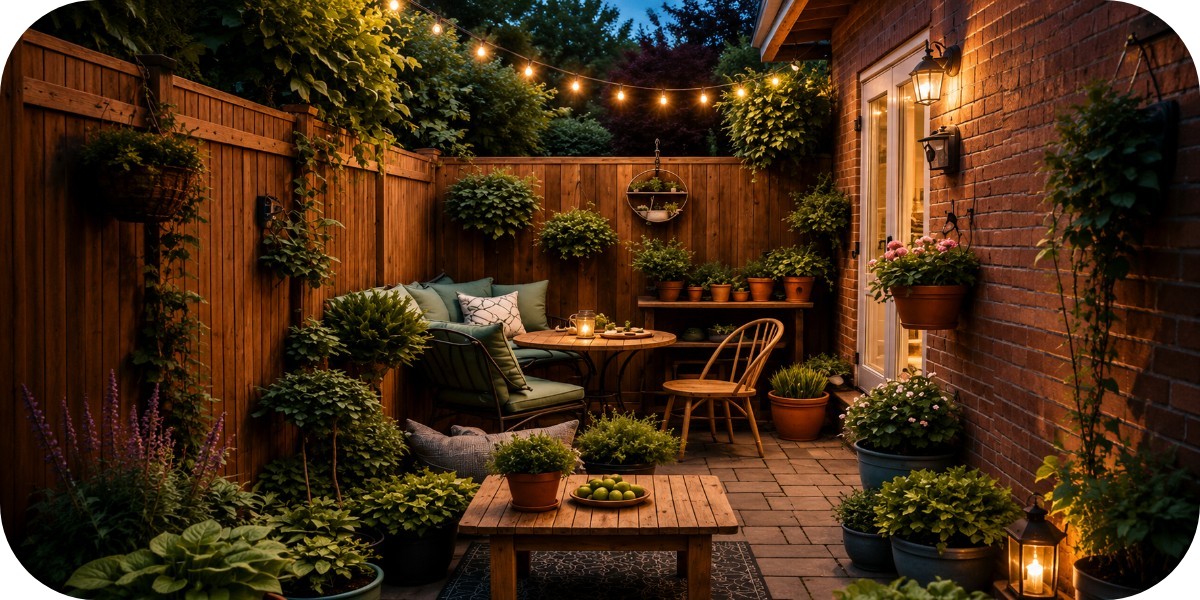
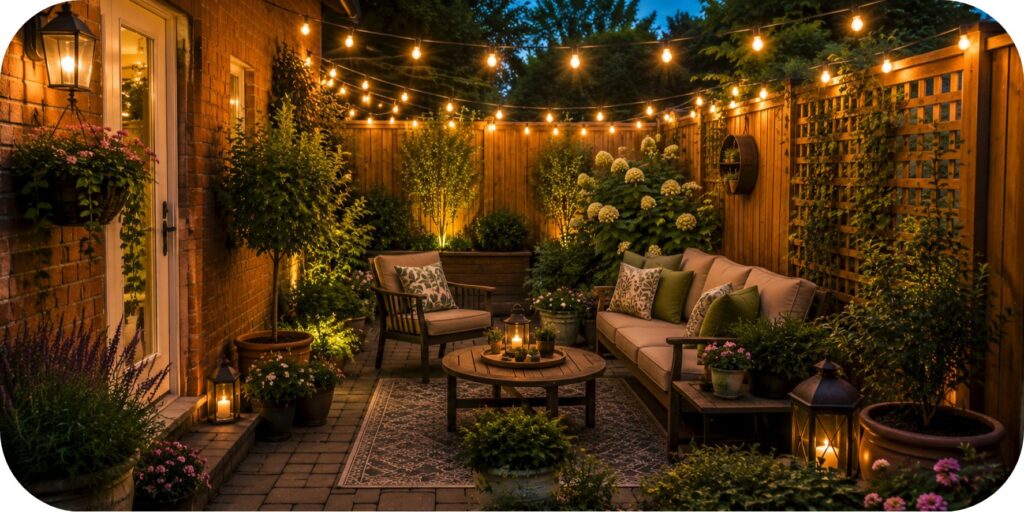
A narrow backyard can be tricky because almost everything competes for the same few feet of floor space. What makes this garden work is that it doesn’t try to solve the problem with one large feature. Instead, plants climb the boundaries, containers fill smaller gaps, and compact furniture creates several useful places to sit without closing off the path through the garden.
You could recreate this look on a patio, side yard, or narrow backyard without changing the basic structure of the space. Start with the larger elements, then gradually add greenery and the smaller details that make it feel established.
Start With a Simple Patio Foundation
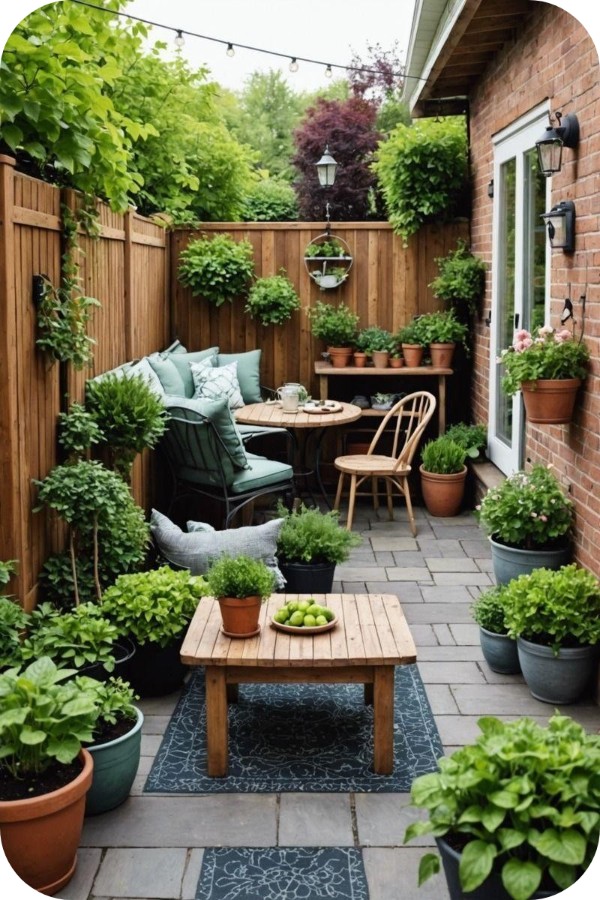
The paved floor is doing more work here than you might notice at first. Neutral gray pavers create a calm background for all the green foliage and warm terracotta while also giving furniture and containers a stable surface.
If your backyard already has concrete or paving, there’s no reason to replace it just to get this look. An outdoor rug can soften an existing hard surface and visually define the main seating area.
For a new patio, choose relatively simple pavers in gray, charcoal, taupe, or another natural stone tone. Keeping the floor understated lets the plants become the colorful part of the garden.
Products to consider: patio pavers, pea gravel, outdoor rug, landscape edging.
Use the Boundaries as Part of the Garden
In a tiny backyard, the fence and house wall aren’t just boundaries. They’re valuable growing and decorating space.
The wooden fence in this garden provides a warm backdrop while supporting climbing greenery and elevated plants. Instead of placing everything at ground level, use wall-mounted planters, hanging containers, trellises, or plant brackets to introduce greenery higher up.
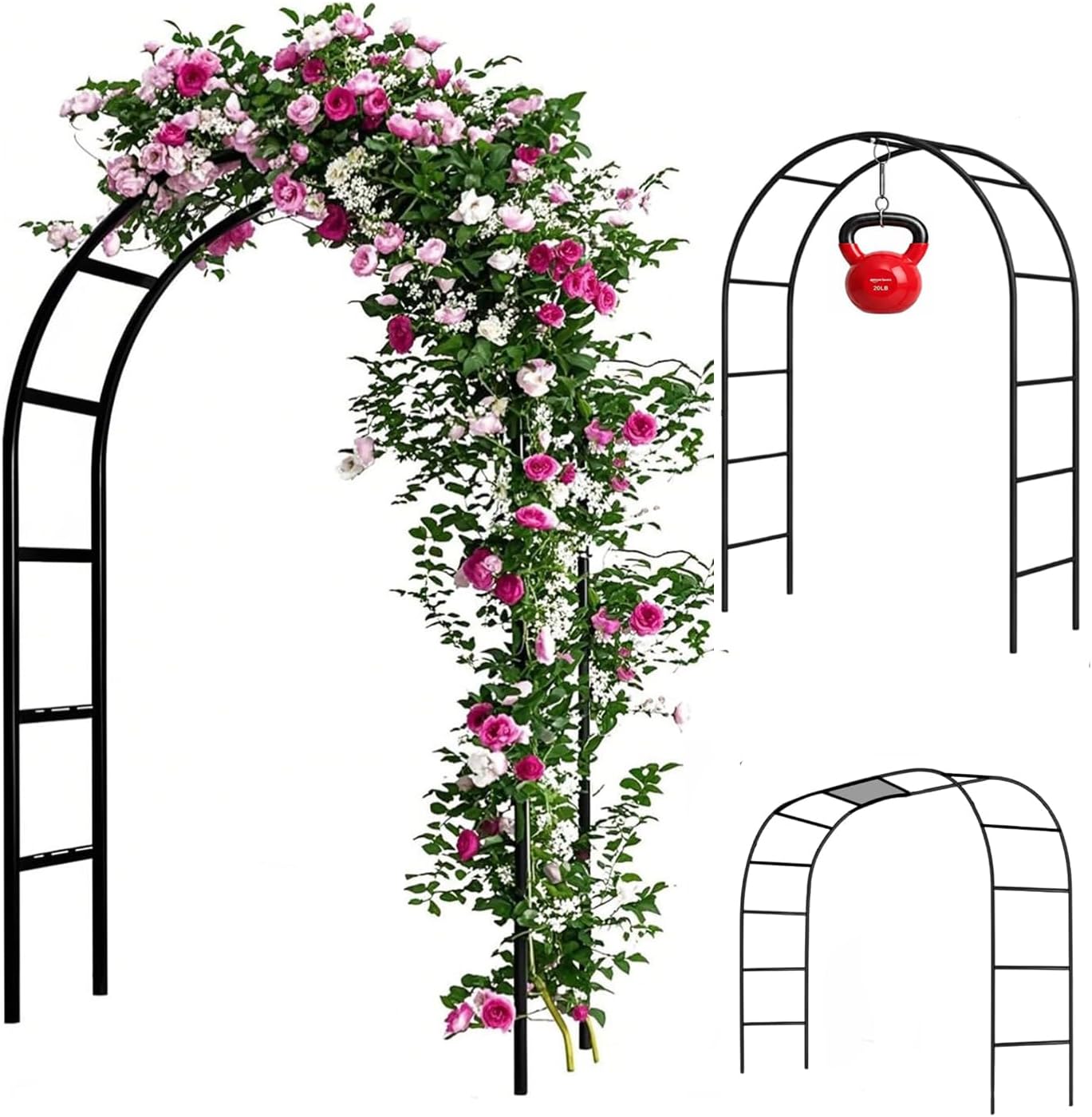
A narrow wooden or metal trellis would work particularly well for clematis, star jasmine, climbing nasturtiums, or another climber appropriate for your growing conditions.
Try not to cover every available section of fence. Leaving some wood visible gives the eye somewhere to rest and helps individual plants stand out.
Why this works: Moving part of the garden vertically gives you considerably more planting space without making the walkway narrower.
Products to consider: narrow garden trellis, wall-mounted planters, hanging planter brackets, climbing plant supports.
Build Greenery at Several Heights
The abundance in this backyard comes from layering rather than simply adding more pots.
Start with your tallest greenery. A climbing plant, compact shrub, or small ornamental tree can establish the upper layer. Beneath that, introduce medium-height shrubs, flowering plants, herbs, or grasses.
Then use lower containers and leafy plants to fill the bottom of the composition.
You’ll notice that the plants don’t all finish at the same height. That’s important. A row of identical pots can emphasize how narrow a backyard is, while varied plant heights encourage your eye to travel upward and around the space.
You can get some of this effect before plants mature by using containers of different heights or placing one smaller pot on a sturdy outdoor plant stand.
Products to consider: tall outdoor planters, terracotta pots, ceramic planters, outdoor plant stands, compact shrubs, trailing plants.
Create One Cozy Main Seating Area
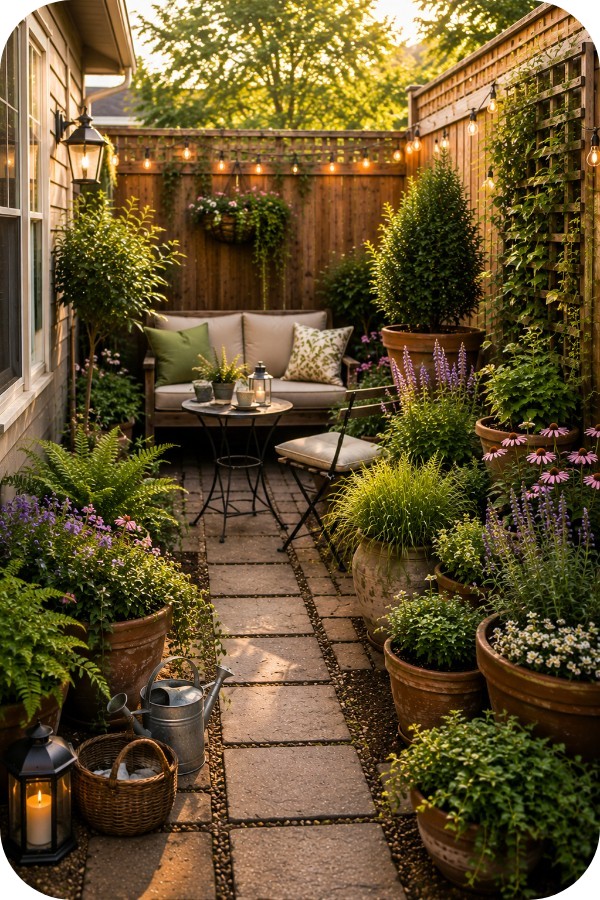
The cushioned seating tucked against the fence turns what could have been an awkward end of the yard into the destination.
For a backyard this narrow, look for a compact outdoor loveseat or small bench rather than a deep sectional. Measure carefully before buying anything. You should be able to sit comfortably without forcing everyone else to squeeze past the furniture.
Add one or two outdoor cushions for softness, but don’t overload the seating. There is already plenty happening visually with the surrounding plants.
This is also a good place to use the deepest part of the garden. Putting larger seating toward the end draws your eye through the space instead of visually blocking it near the entrance.
Products to consider: compact outdoor loveseat, small garden bench, weather-resistant seat cushions.
Add Flexible Seating Instead of a Full Dining Set
One of my favorite details here is that the furniture doesn’t look like a matching patio set.
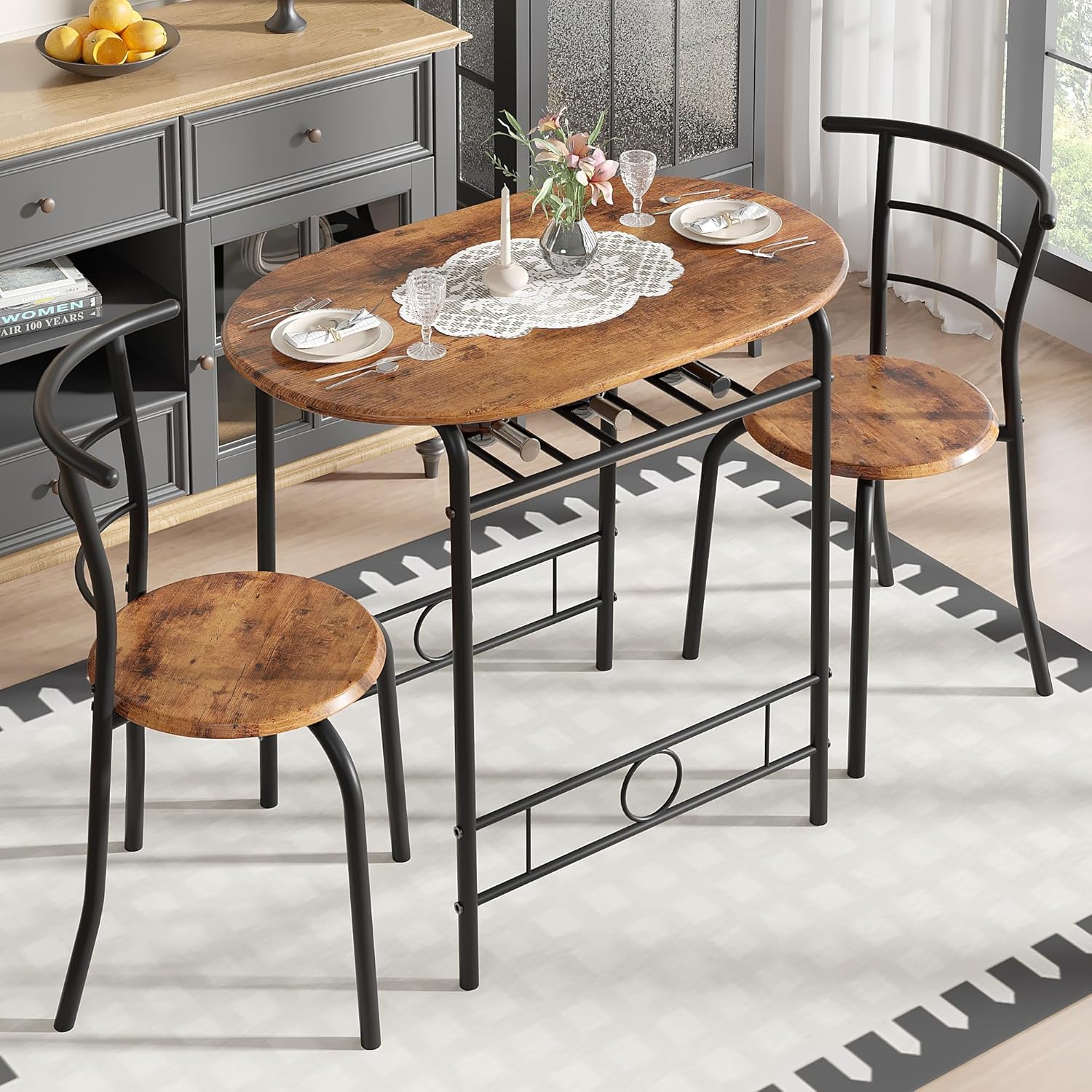
A small round table and individual chairs provide a place for coffee, lunch, or a quiet evening outside without requiring the footprint of a traditional dining table. Chairs can also be repositioned whenever you need more walking room.
A folding bistro table could make this arrangement even more flexible in an especially tight backyard.
Choose pieces with visually light frames or narrow legs rather than bulky bases. Being able to see beneath furniture helps a small patio feel less crowded.
Products to consider: small bistro table, compact outdoor chairs, folding garden chairs.
Use Containers to Fill the Awkward Gaps
Containers are particularly useful here because they let you garden in those little pieces of space that aren’t large enough for furniture.
Place larger pots near corners and architectural boundaries, then introduce medium and smaller containers nearby. Terracotta works beautifully with a wooden fence and brick wall, while one or two darker or glazed containers can keep the arrangement from looking too uniform.
Create One Cozy Main Seating Area
The cushioned seating tucked against the fence turns what could have been an awkward end of the yard into the destination.
For a backyard this narrow, look for a compact outdoor loveseat or small bench rather than a deep sectional. Measure carefully before buying anything. You should be able to sit comfortably without forcing everyone else to squeeze past the furniture.
Add one or two outdoor cushions for softness, but don’t overload the seating. There is already plenty happening visually with the surrounding plants.
This is also a good place to use the deepest part of the garden. Putting larger seating toward the end draws your eye through the space instead of visually blocking it near the entrance.
Products to consider: compact outdoor loveseat, small garden bench, weather-resistant seat cushions.
Add Flexible Seating Instead of a Full Dining Set
One of my favorite details here is that the furniture doesn’t look like a matching patio set.
A small round table and individual chairs provide a place for coffee, lunch, or a quiet evening outside without requiring the footprint of a traditional dining table. Chairs can also be repositioned whenever you need more walking room.
A folding bistro table could make this arrangement even more flexible in an especially tight backyard.
Choose pieces with visually light frames or narrow legs rather than bulky bases. Being able to see beneath furniture helps a small patio feel less crowded.
Products to consider: small bistro table, compact outdoor chairs, folding garden chairs.
Use Containers to Fill the Awkward Gaps
Containers are particularly useful here because they let you garden in those little pieces of space that aren’t large enough for furniture.
Place larger pots near corners and architectural boundaries, then introduce medium and smaller containers nearby. Terracotta works beautifully with a wooden fence and brick wall, while one or two darker or glazed containers can keep the arrangement from looking too uniform.
Product Suggestions

Click Image To View

Click Image To View
Click Image To View
You don’t need a pot every few inches.
Give some containers breathing room and allow the foliage itself to bridge the visual gaps. As plants grow, the arrangement will naturally become softer and fuller.
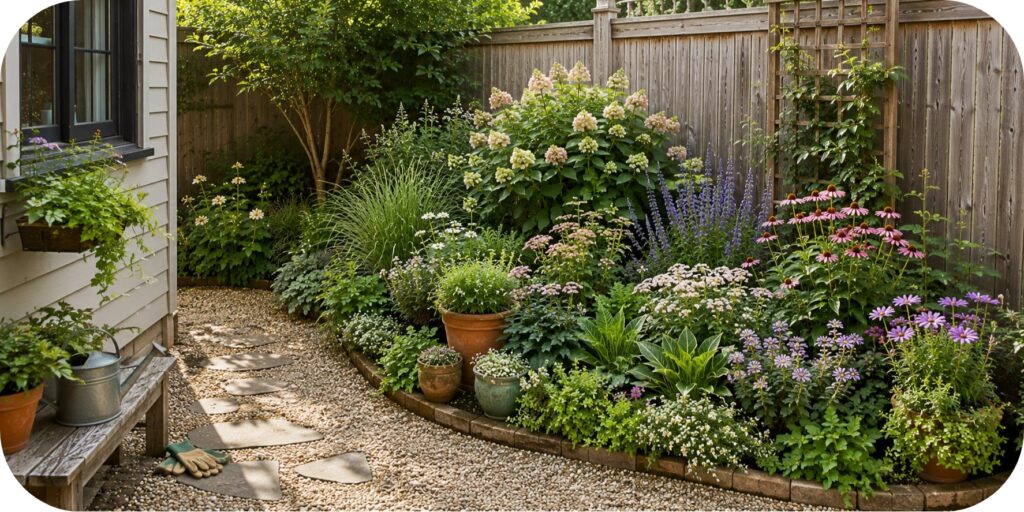
For a similar look, combine leafy plants with a smaller number of flowering varieties. The image gets most of its lushness from green foliage rather than an enormous amount of color.
Products to consider: terracotta planters, glazed ceramic pots, lightweight outdoor planters, pot feet, container potting mix.
Bring Plants Onto the Brick Wall
The brick wall offers another opportunity to grow upward without sacrificing patio space.
A wall-mounted planter containing trailing greenery or flowers can soften a large expanse of masonry and visually connect the house with the rest of the garden. You could also use a small wall trellis if you’d rather grow a climber.
Just make sure anything attached to the house uses mounting hardware appropriate for the wall material and the filled weight of the container.
This is one area where restraint matters. A few thoughtfully positioned plants will usually look better than covering the entire wall.
Products to consider: wall planter, exterior planter bracket, compact wall trellis.
Add String Lights Overhead
The string lights are simple, but they change how the backyard can be used.
Rather than filling the garden with decorative lighting, run one or two strands of outdoor-rated lights overhead. During the day they’re relatively unobtrusive, while in the evening they can make the narrow patio feel much more intimate.
Warm-white bulbs would suit the wood, brick, terracotta, and greenery especially well.
Keep the installation high enough that the lights don’t interfere with walking or gardening, and use products specifically rated for outdoor use.
Products to consider: outdoor string lights, exterior light hooks or appropriate mounting hardware.
Keep a Clear Route Through the Garden
With this many plants, the backyard could easily become difficult to use. The reason it doesn’t is that the center still functions as a pathway.
Before adding another planter, chair, or table, check whether you can comfortably walk from the house to the back seating area. Containers should frame that route rather than gradually creep into it.
This is also useful when watering. You’ll want to reach every container without moving furniture or stepping over plants.
In a tiny backyard, a little empty floor space isn’t wasted space. It’s what allows all the fuller areas around it to work.
Finish With a Few Everyday Details
Once the main layout is established, you don’t need much decoration.
An outdoor rug helps define the seating area. A couple of cushions soften the furniture. Terracotta provides warmth. Plants supply most of the color and texture.
Even something as ordinary as a small watering can left near a group of pots can reinforce the feeling that this is a real garden that’s actually used.
I’d stop adding accessories before the space feels completely “finished.” Once the plants begin growing and trailing, they’ll provide plenty of detail on their own.
Products You’ll Need to Recreate the Look
For the closest interpretation of this backyard, I’d focus your product blocks on these items:
Narrow garden trellis
Choose a slim wood or weather-resistant metal design that can support climbing plants without projecting far into the walkway.
Terracotta planter set
Look for several graduated sizes rather than an identical matching set.
Wall-mounted planters
Choose outdoor-rated containers with secure mounting systems and enough depth for the plants you’re growing.
Outdoor plant stands
Simple narrow stands can raise selected pots and help create the varied planting heights seen throughout the garden.
Compact outdoor loveseat or garden bench
Prioritize shallow depth and a footprint appropriate for narrow patios.
Small bistro table and chairs
A round or folding table makes it easier to preserve circulation in a tight space.
Outdoor rug
Choose a weather-resistant rug sized to define one seating zone without covering the entire patio.
Outdoor string lights
Warm-white, outdoor-rated lights provide simple overhead illumination without using additional floor space.
Product Suggestions
Click Image To View

Click Image To View

Click Image To View
You don’t have to recreate every detail at once. I’d begin with the seating position, clear walkway, and three or four substantial plants, then add containers vertically and around the boundaries. Once those layers start filling in, you’ll have a much better sense of where the garden genuinely needs another plant and where a little open space should stay exactly as it is.